If you have been scrolling through before-and-afters trying to decide between Microneedling and a HydraFacial, you are not alone. Both are popular, both promise glowing, healthier-looking skin, and both show up constantly in the same conversation which makes the Microneedling vs. HydraFacial question one of the most common ones we hear at 212 Med Spa in Edmonds, WA.
The truth is, these two treatments are not really competing with each other. They work in different ways, target different layers of your skin, and often solve different problems. This guide breaks down exactly what each treatment does, how they compare on the things that actually matter to you—results, downtime, pain, and cost—and how to figure out which one (or both) fits your skin goals.
Microneedling vs. HydraFacial at a Glance
If you only have thirty seconds, here is the short version: a HydraFacial gives you an instant, no-downtime glow by deeply cleansing and hydrating the surface of your skin, while microneedling works underneath the surface to trigger new collagen production for longer-term changes in texture and scarring. One is immediate gratification; the other is a gradual investment.
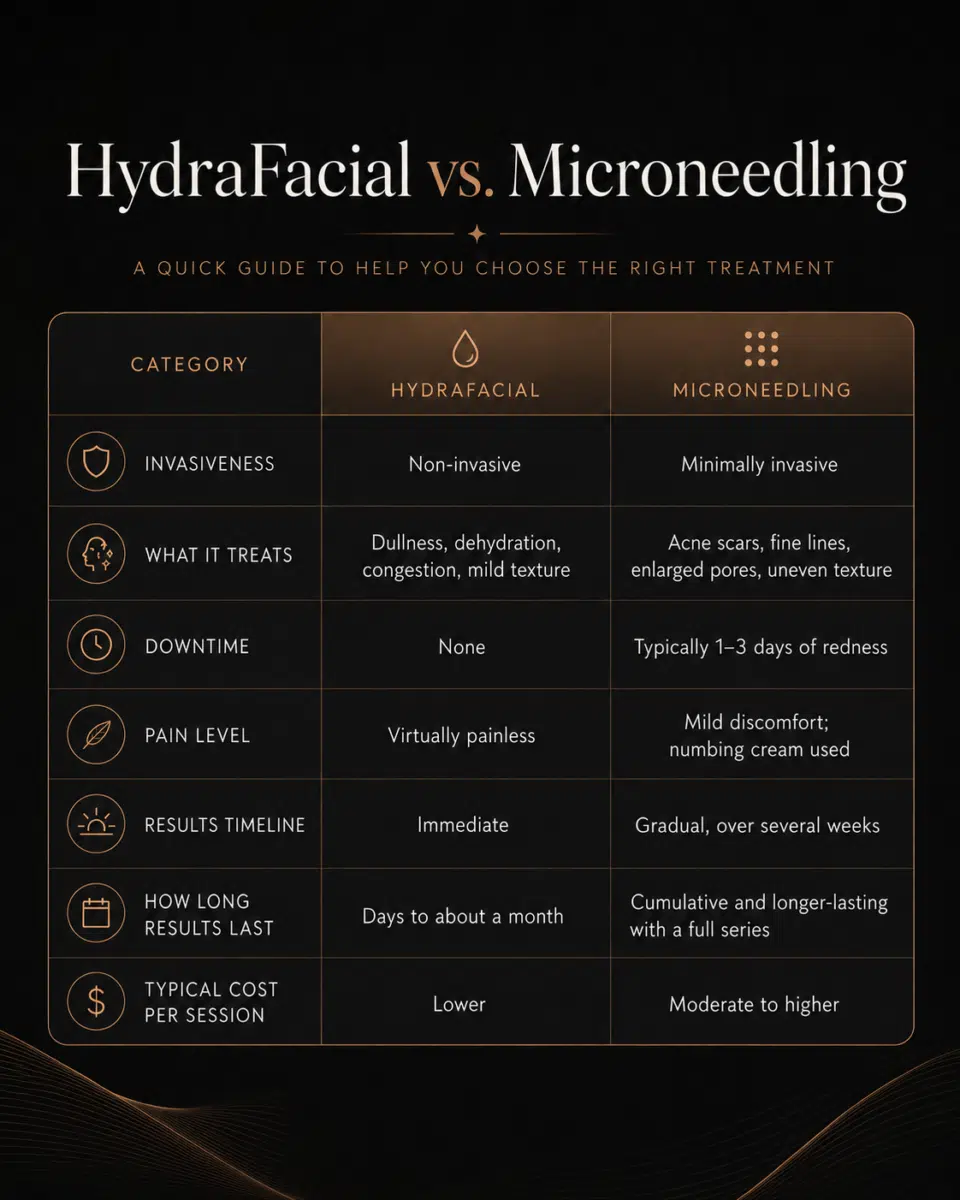
HydraFacial delivers an instant, no-downtime glow and hydration boost, while microneedling triggers a slower, cumulative collagen response that reshapes texture and scarring over time. Neither one is “better” across the board—it depends entirely on what your skin needs right now.
What Is a HydraFacial?
A HydraFacial is a multi-step, machine-assisted facial that cleanses, exfoliates, extracts, and hydrates your skin in a single session. It uses a handheld device with a specialized tip that combines gentle suction with topical solutions, so your esthetician can clean out your pores and nourish your skin at the same time.
How a HydraFacial Works
Every HydraFacial follows the same basic sequence, though the specific serums used may be customized to your skin. First, your skin is cleansed and gently resurfaced to lift away dead skin cells. Next comes extraction, where a vortex-style suction tip painlessly draws out debris, oil, and buildup from your pores. Finally, your esthetician infuses your skin with hydrating serums—typically featuring ingredients like hyaluronic acid, peptides, and antioxidants—to nourish and protect it. The entire process usually takes 30 to 45 minutes.
What Skin Concerns a HydraFacial Targets
HydraFacials are especially good at addressing surface-level concerns: dull or dehydrated skin, clogged or congested pores, mild dryness, and an overall lack of glow. Because the serums used can be tailored to a specific goal, a HydraFacial can also give a temporary boost to the appearance of fine lines or uneven tone, even though it does not change the deeper structure of your skin the way microneedling can.
What Is Microneedling?
Microneedling, also called collagen induction therapy, uses a device with a cluster of very fine, sterile needles to create controlled micro-injuries in the skin. It sounds more intense than it feels—the needles are tiny, and numbing cream is applied beforehand to keep you comfortable.
How Microneedling Works
Those tiny punctures signal your body to kick its natural healing process into gear, which means ramping up production of collagen and elastin—the proteins responsible for firm, smooth, resilient skin. According to the American Academy of Dermatology, this process can help fade acne scars, dark spots, enlarged pores, uneven texture, and fine lines and wrinkles over time. Unlike a HydraFacial, which primarily works on the skin’s surface, microneedling reaches into the dermis, where structural change actually happens.
What Skin Concerns Microneedling Targets
Microneedling shines when the goal is remodeling rather than refreshing. It is most often used for acne scars and pitted texture, fine lines and early wrinkles, enlarged pores, and general skin texture and tone. The AAD notes that studies on microneedling for acne scars have shown improvement of roughly 50–70% after a series of three to five sessions, which gives a realistic sense of what a full treatment plan can accomplish.
Microneedling vs. HydraFacial: The Key Differences
Once you understand what each treatment actually does, the differences below are what will help you decide which one makes sense for your skin right now.
Depth of each Treatment
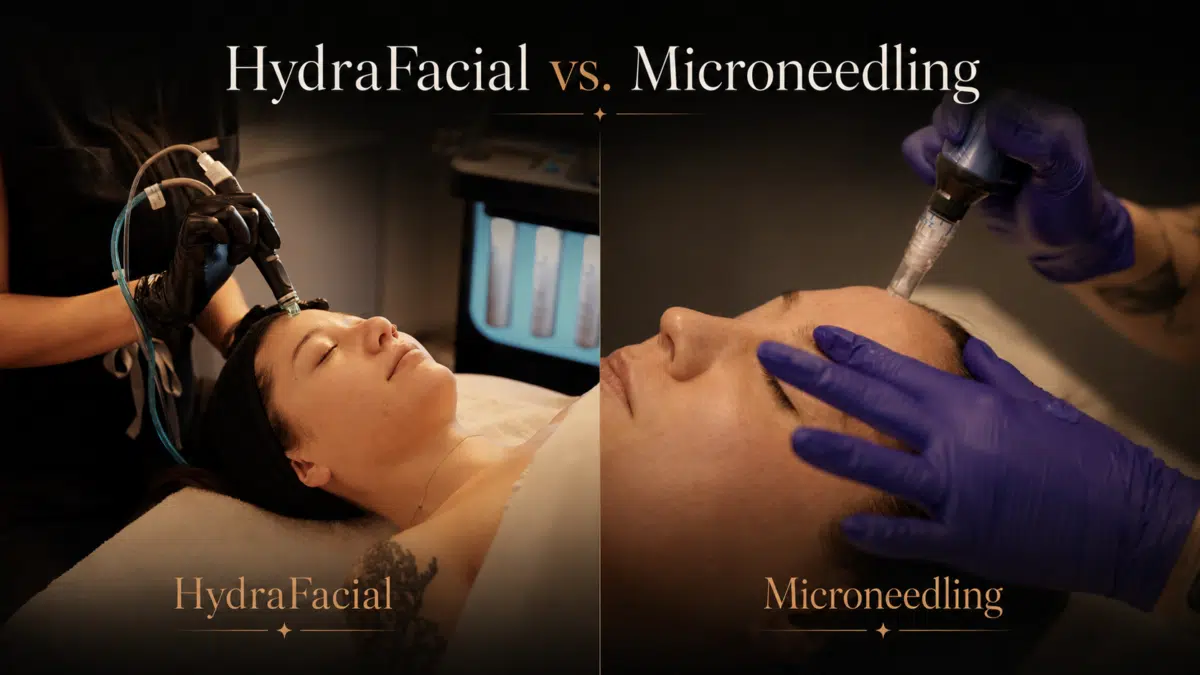
A HydraFacial works on the outermost layer of your skin—the epidermis—cleansing, exfoliating, and hydrating what is already there. Microneedling goes deeper, creating micro-injuries in the dermis to stimulate new collagen and elastin. That difference in depth is the reason one gives you an instant glow while the other reshapes your skin’s structure over time.
Downtime and Recovery
HydraFacial has no downtime at all—you can go straight back to work, a event, or a night out. Microneedling typically comes with one to three days of redness, similar to a mild sunburn, though most people find it manageable and easy to plan around.
How Fast You See Results
A HydraFacial delivers visible results immediately; your skin will look brighter and feel smoother the moment you leave. Microneedling results appear more gradually, since they depend on your body’s own collagen production, which unfolds over several weeks after each session.
How Long Results Last
HydraFacial glow is temporary, generally lasting anywhere from a few days up to about a month, which is why many people book it monthly as a maintenance treatment. Microneedling results are cumulative—each session builds on the last, and the collagen improvements from a full series tend to last considerably longer, though a yearly maintenance session can help sustain the results.
Comfort and Pain
HydraFacial is virtually painless and often described as relaxing. Microneedling involves mild discomfort, but topical numbing cream keeps most clients comfortable throughout the session.
Benefits, Drawbacks, and Risks of Each
Neither treatment is perfect for every situation, and understanding the trade-offs will help you set realistic expectations.
HydraFacial Pros, Cons, and Limitations
The upside of a HydraFacial is real: no downtime, no pain, and immediate results make it one of the easiest treatments to fit into a busy schedule. The limitation is that it does not create structural change in the skin, so results are temporary and mostly cosmetic. If your main concern is scarring or deep wrinkles, a HydraFacial alone likely will not get you there.
Microneedling Pros, Cons, and Limitations
Microneedling’s strength is its ability to produce real, lasting changes in skin texture and scarring by working with your body’s own healing response. The trade-off is that it requires some downtime, mild discomfort, and patience—you typically need a series of sessions spaced several weeks apart to see the full effect, and results build gradually rather than all at once.