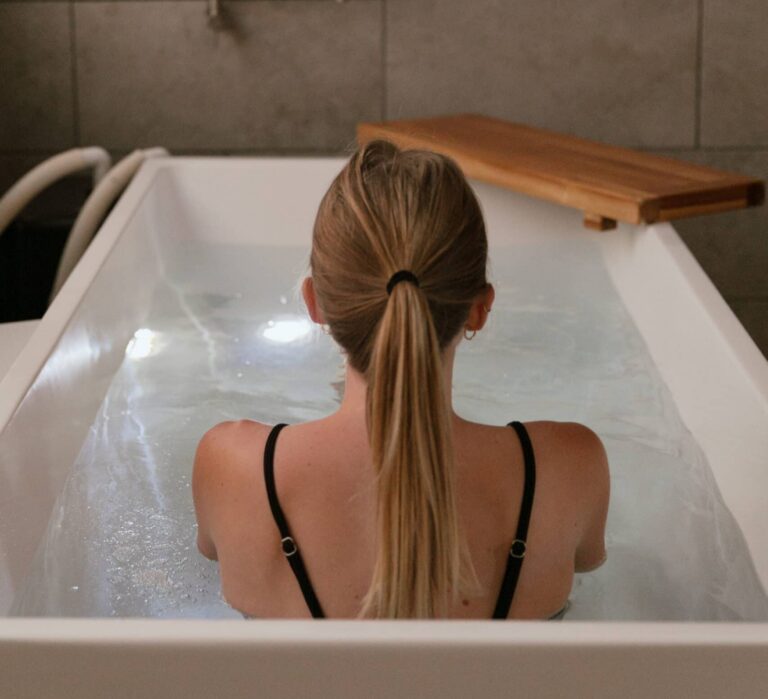
If you have been going back and forth on infrared vs salt sauna sessions, you are not alone. It is one of the most common questions we hear at our front desk in Harbor Square. Both rooms are warm, quiet and relaxing, but they heat you in different ways, and the research behind each one is not equally strong. This guide walks through how each sauna works, what the science does and does not support, and how to decide which one fits your goals.
The short answer: An infrared sauna warms your body directly with radiant heat while the air stays relatively mild, so it suits people who want a longer, gentler sweat for relaxation and sore muscles. A Himalayan salt sauna is a hot-air sauna lined with salt, so it feels closer to a classic sauna; most of its well-documented effects come from the heat, and the evidence for the salt itself is still limited. If you can’t decide, try both in the same week, then add a cold plunge to see which pairing you enjoy most.
Infrared vs. Salt Sauna at a Glance
| Infrared Sauna | Himalayan Salt Sauna | |
| How it heats you | Infrared panels warm your skin and tissues directly; the air stays milder | A heater warms the air, which then warms you, in a room built with Himalayan salt bricks or panels |
| Typical temperature | About 110–135°F in most infrared saunas | 212 lists its salt sauna at 180–190°F |
| How it feels | Steady, even warmth; easy to breathe | Classic sauna heat with a warm, glowing salt-wall setting |
| Session length | 30–45 minutes is typical at 212 | Shorter, heat-guided sessions; start around 10–15 minutes |
| Strongest evidence | Short-term heart rate and circulation changes; small studies on pain and soreness | Heat effects shared with traditional saunas; salt benefits supported only by limited research |
| Best for | Heat-sensitive beginners, longer unwinding, post-workout stiffness | People who love traditional sauna heat and the atmosphere of a salt room |
| Pairs with a cold plunge? | Yes | Yes |
How an Infrared Sauna Works
A traditional sauna heats the air, and the hot air heats you. An infrared sauna skips most of that step. Infrared panels give off radiant energy that your skin absorbs directly, a bit like the warmth you feel standing in sunshine on a cool spring day at the Edmonds waterfront.
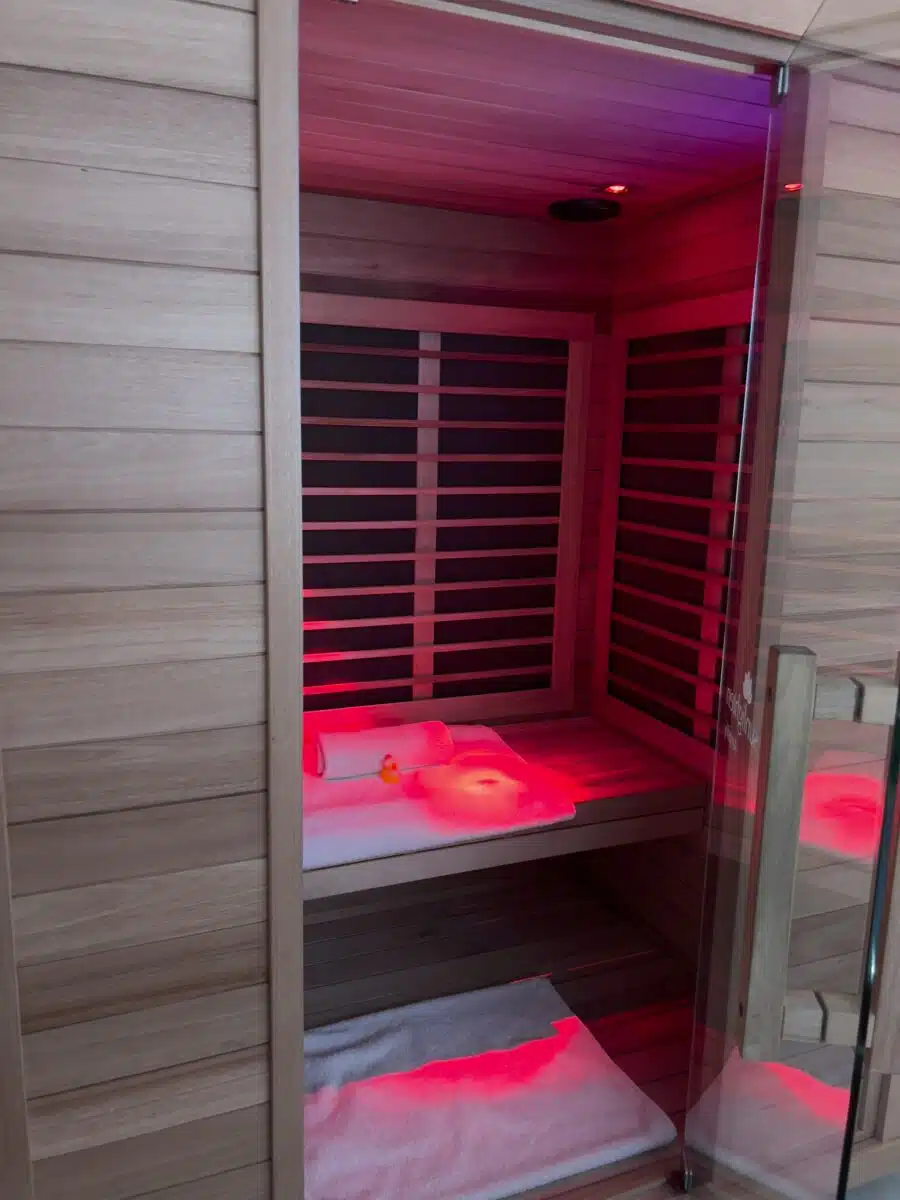
Because the air does not have to get as hot, infrared saunas usually run cooler. Cleveland Clinic’s overview of infrared sauna benefits puts most infrared units at roughly 110–135°F, compared with about 150–195°F for traditional saunas. You still sweat, your heart rate climbs and your blood vessels widen. Many people simply find it easier to stay in long enough to fully relax.
What the research suggests: Small studies point to possible help with chronic pain and post-exercise soreness, and many people report better relaxation and easier wind-down before bed. Much of the strongest long-term heart research, however, comes from traditional saunas rather than infrared, so infrared-specific evidence is thinner.
What it doesn’t show: Your body clears waste mainly through the liver and kidneys, so think of the sweat as a side effect rather than a cleanse. And as relaxing as it is, a sauna session doesn’t replace exercise.
At 212, a typical infrared sauna session in Edmonds lasts 30–45 minutes. Wear loose, comfortable clothing or a swimsuit; towels are provided.

How a Himalayan Salt Sauna Works (What Research Does and Doesn’t Show)
Our Himalayan salt sauna combines traditional sauna heat with walls of Himalayan salt bricks and panels. To understand what it can do, it helps to separate two ingredients: the heat and the salt.
The heat: well studied
Hot-air saunas are the most researched type. Large observational studies from Finland found that people who used saunas more often had lower rates of fatal heart events. That is an association, not proof that the sauna caused the difference, but it is the main reason heat therapy gets attention for long-term health. We cover that research in more depth in our sauna and cold plunge routine guide.
Which Is Right for Your Goals?
Choose the infrared sauna if you:
- Find traditional saunas too intense or hard to breathe in
- Want a longer session to read, meditate or decompress
- Are easing stiff muscles after a workout at Harbor Square Athletic Club next door
Choose the Himalayan salt sauna if you:
- Love the deep, enveloping heat of a classic sauna
- Want a shorter, more intense session
- Enjoy the atmosphere of a glowing salt room
Try both if you:
- Are new to saunas and unsure how you handle heat
- Want to build a regular recovery and longevity habit and find which one you will stick with
There is no wrong answer here. The sauna you actually enjoy and return to will do more for you than the “perfect” one you skip.

Pairing Either Sauna With a Cold Plunge
Contrast therapy means alternating heat with cold. Heat widens your blood vessels; cold narrows them. Research on contrast therapy is strongest for exercise recovery, where it can help with soreness and how recovered you feel. Plenty of people also love the alert, clear-headed feeling afterward.
Our cold plunge in Edmonds is typically kept between 40–50°F. Beginners usually start with 1–2 minutes, and most people stay in 1–3 minutes once they adapt. 212’s Contrast Room puts a sauna and a luxury cold plunge in the same space, so you can move between them without walking through the spa. [CONFIRM WITH 212: official room name, which sauna is in the Contrast Room, and its temperature setting.]
A simple beginner round:
- Sauna for 10–15 minutes
- Cold plunge for 30–60 seconds
- Sauna again for 10–15 minutes
- Cold plunge for 45–90 seconds
Which sauna works best as the “hot” half? The salt sauna gives a quicker, stronger heat before the plunge. Infrared is a gentler warm-up if hot air feels like too much.
If you lift weights for muscle growth, consider saving the cold plunge for later in the day, since cold right after strength training may blunt some muscle-building signals. To round out a recovery visit, many guests finish with compression therapy for tired legs.
Infrared vs. Salt Sauna FAQ
Which is better for recovery?
For post-workout muscle stiffness, the infrared sauna’s gentle, longer heat is a comfortable choice. For recovery after hard training, research favors cold water immersion, so pairing either sauna with a cold plunge is often the best option.
What temperature is each?
212’s Himalayan salt sauna is listed at 180 – 190°F Infrared saunas generally run about 110–135°F, and because they heat you directly, they often feel milder than the number suggests.
How long should I stay in?
At 212, a typical infrared sauna session lasts 30–45 minutes. In a hot-air sauna, start with 10–15 minutes and build up slowly. Always leave sooner if you feel lightheaded.
Can I do both in one visit?
Yes. Many guests start in one sauna, take a short cold plunge, then finish in the other. Keep your total heat time moderate and drink water between rounds.